Intranet Design Strategy Case Study: Pinterest Intranet Launch
Building a unified digital headquarters for a high-growth global workforce.
Case Study Snapshot
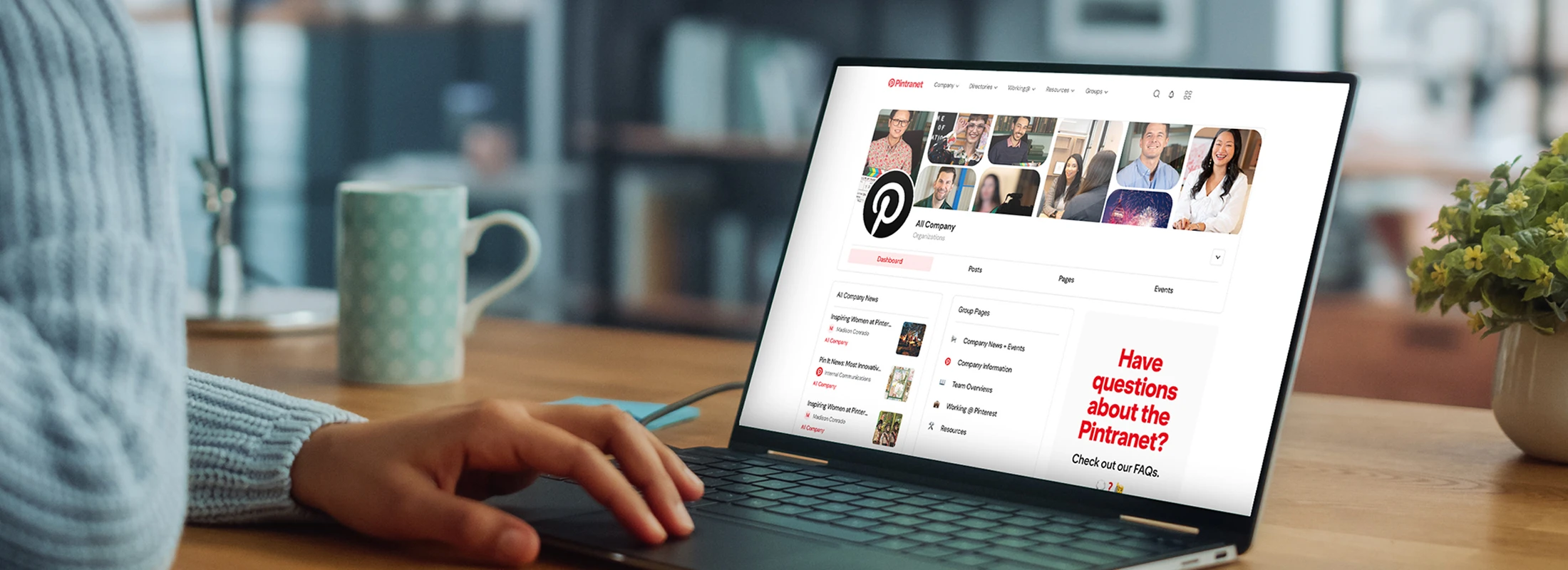
As Pinterest scaled to 5,000+ employees, their lack of a centralized internal destination led to operational complexity and inefficiencies. Ingenuity led the intranet design strategy to launch Pinterest’s first-ever intranet, “Pintranet.” By acting as the strategic translator between leadership, IT, HR, Comms and global employees, we helped Pinterest consolidate company intranet content from dozens of disconnected microsites into a unified enterprise digital headquarters. In just five months, we transformed fragmented data into a task-based ecosystem that empowers every “Pinployee” to find inspiration and information with ease.
About the Client
Empowering discovery for the world and a workforce
Pinterest is a social media and content discovery platform where hundreds of millions of people find inspiration. With 5,000+ employees and 700+ new hires expected in the coming year, the organization recognized its internal infrastructure needed to match the seamless, intuitive experience of its external product. To maintain their culture of creativity, they needed a digital home that served as a trusted, scalable headquarters for discovery.

Our Take
“An intranet should be your organization’s digital headquarters—the heartbeat of your culture. If your internal tools don’t spark the same sense of discovery as your consumer product, you aren’t just losing efficiency; you’re losing the connection to your people. Our goal was to turn ‘searching’ back into ‘discovering.’”
The Challenge
90 content owners, 16 offices, and a five-month countdown
Pinterest didn’t have a central intranet. Instead, vital company information was scattered across multiple legacy platforms, Slack channels and Google Docs. As the company grew, information naturally became siloed across orgs and multiple platforms. This led to a culture gap where global offices felt disconnected from the San Francisco headquarters.
- The search struggle: Because company content lived across disconnected sites and channels, employees lacked a single, trusted “front door” to find resources and updates quickly and confidently.
- Inconsistent global experiences: Non-U.S. employees needed easier access to location-specific content, regional resources, and information that reflected their day-to-day experience.
- The content ownership challenge: Content owners needed a clearer framework for creating, managing, and maintaining content across teams, regions, and departments.
- The timeline and scale: With 5,000+ employees across 16 offices and 700+ new hires expected within the year, Pinterest had five months to audit, reorganize, and launch an intranet experience that could support a growing global workforce.
Our Approach
A human-centered intranet design strategy
We didn’t just want to build a new site; we wanted to build a new way of working. Using human-centered design, we moved away from the traditional org-based structure. Instead, we focused on employee journey mapping, asking, “What is a Pinterest employee actually trying to accomplish today?”
Our Discovery-to-Governance Roadmap focused on:
- Persona and task-based architecture: We identified and developed nine employee personas informing the 400+ pages of content around actions (e.g., “Taking Leave” or “Getting IT Help”) rather than departments.
- Localizing global experiences: We designed 24 regional hubs, ensuring that an employee in Dublin or Tokyo felt just as “at home” as someone in San Francisco.
- Governance with teeth: We didn’t just hand over a site; we created a framework for 90+ content owners, giving them the tools to keep the platform on track.
- The strategic translator: We acted as the bridge between the IT team’s technical requirements and the stakeholders’ vision, ensuring the platform was as functional as it was useful.
- Enabled launch at scale: With a five-month timeline, we prioritized high-impact content areas, partnered closely with core teams, and supported content owners through workshops, lunch-and-learns, and content architecture guidance.
“The final product was a wow moment that we are all proud of and really represents the modernized platform we were envisioning!”
Senior Director, Pinterest People Technology
What We Delivered
A roadmap for how to consolidate company intranet content
We delivered a comprehensive Discovery-to-Governance Roadmap that turned a blank slate into a vibrant digital ecosystem.
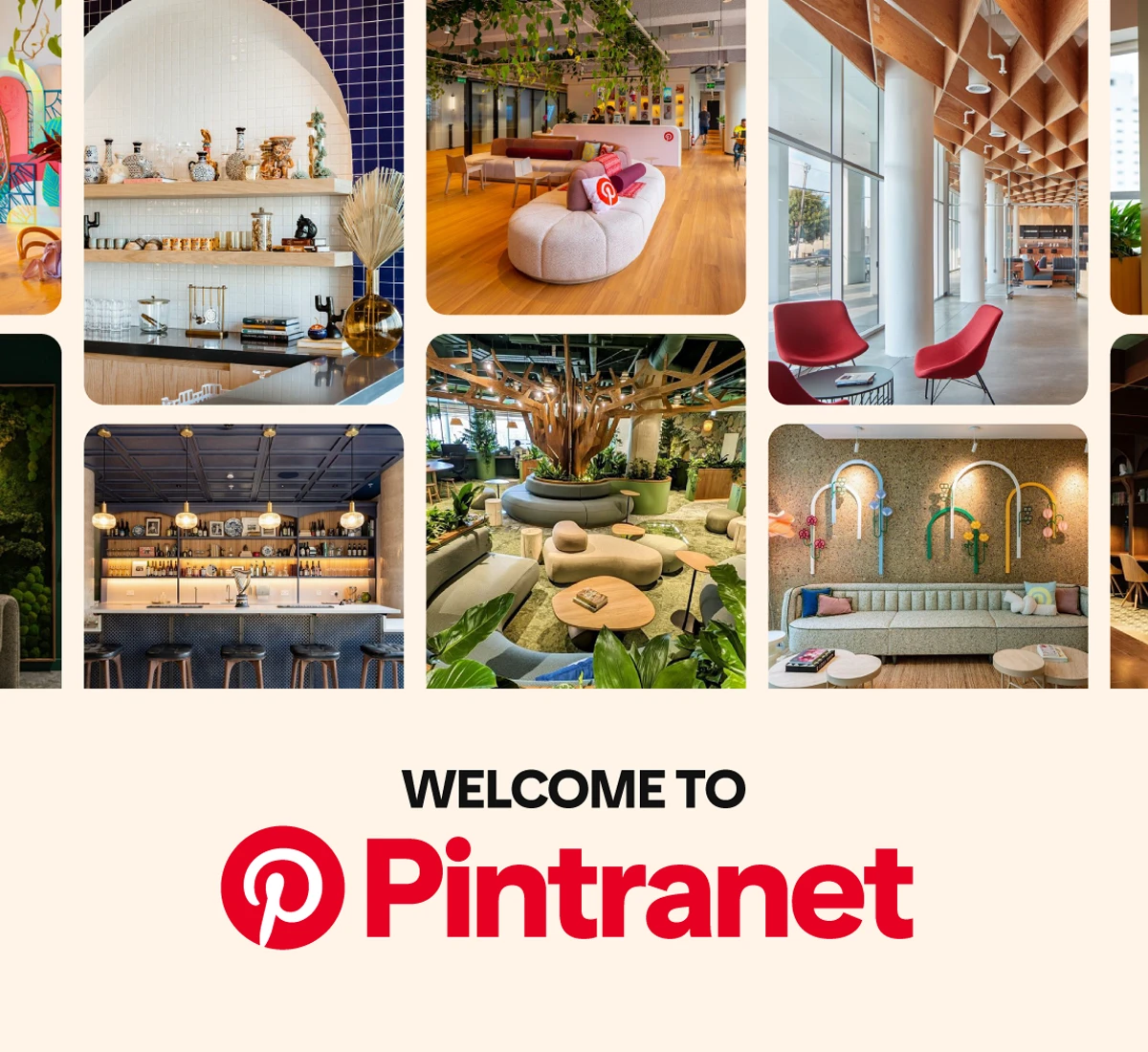
- The Pintranet brand: A vibrant, internal identity that signaled this was a place for inspiration, not just information.
- Localized resources: 24 Custom-tailored hubs ensuring global offices (from Tokyo to Dublin) had a relevant experience.
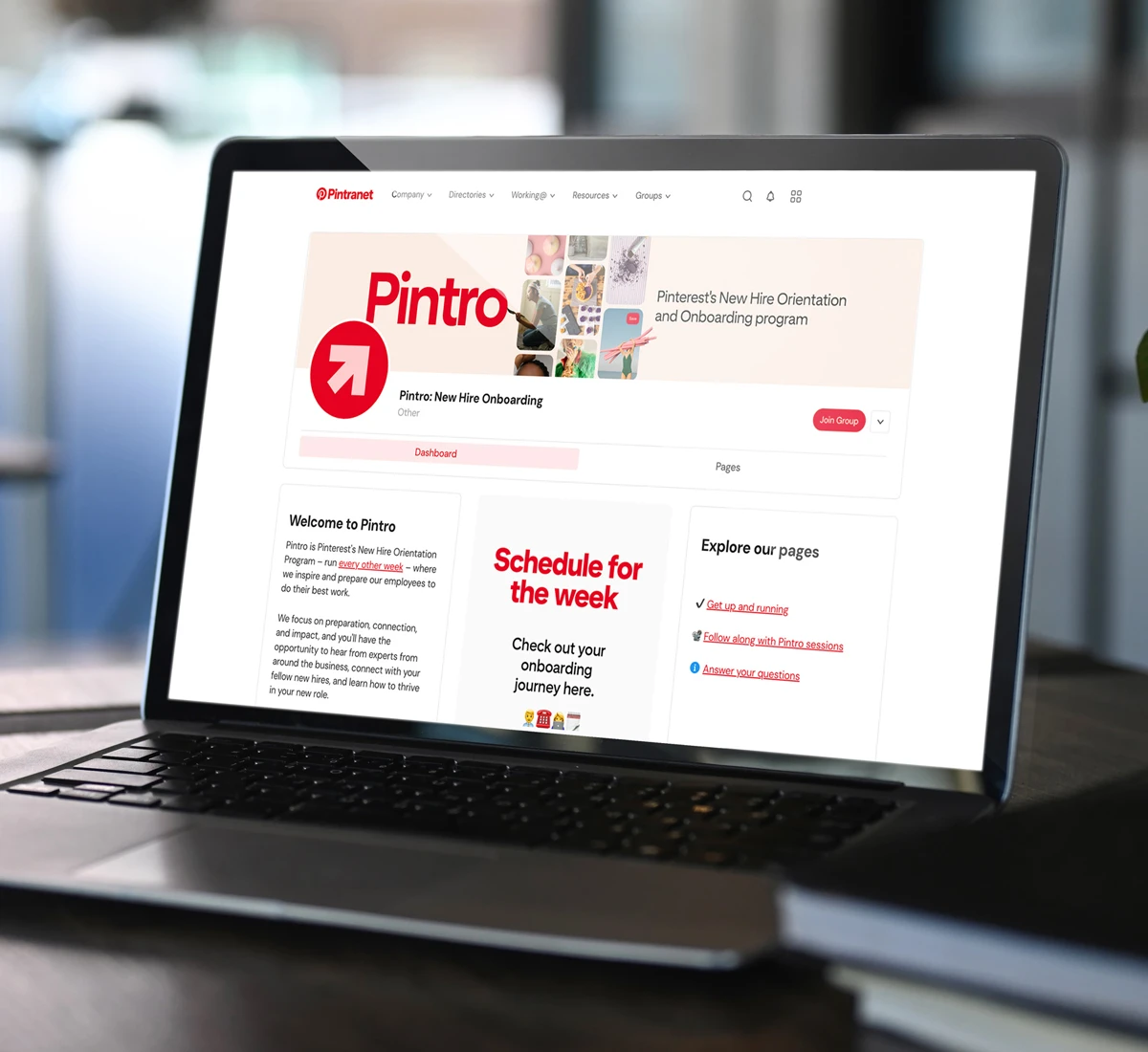
- The onboarding destination: A task-based center that simplified the first 30 days for every new hire.
- The governance playbook: A vital framework designed to empower 90+ content owners to maintain the platform’s high standards long after launch.
The Activation
Launching an enterprise digital headquarters in 20 weeks
The activation required focus and multiple sprints to audit and migrate years of legacy content, with eight cross-functional teams. It was an exercise in radical collaboration.
We conducted intensive governance work sessions to ensure that the people managing the site felt as empowered as the employees who use it. By the time of launch, we had created a “clearer front door” that unified 16 global offices.
Using a people-focused intranet design strategy, Ingenuity Design helped Pinterest consolidate company intranet content into a task-based enterprise digital headquarters, unifying 5,000+ employees across 16 global offices, in just five months.
The Result
A scalable foundation for a global culture
Pintranet’s rollout proves how successful intranet content planning, architecture, and governance could yield immediate results.
One trusted source
5,000+ employees now share a unified, localized digital headquarters.
Efficiency at scale
400+ pages of content developed and 24 regional hubs launched in 20 weeks.
Governance clarity
90 content owners now move in lockstep thanks to a clear governance framework.
Reduced friction
Onboarding teams noted significant time savings as new hires found answers faster and more independently.
Is your organization outgrowing its internal tools?
Check out our Digital Employee Experience services to see how we build digital headquarters that foster connection and discovery.